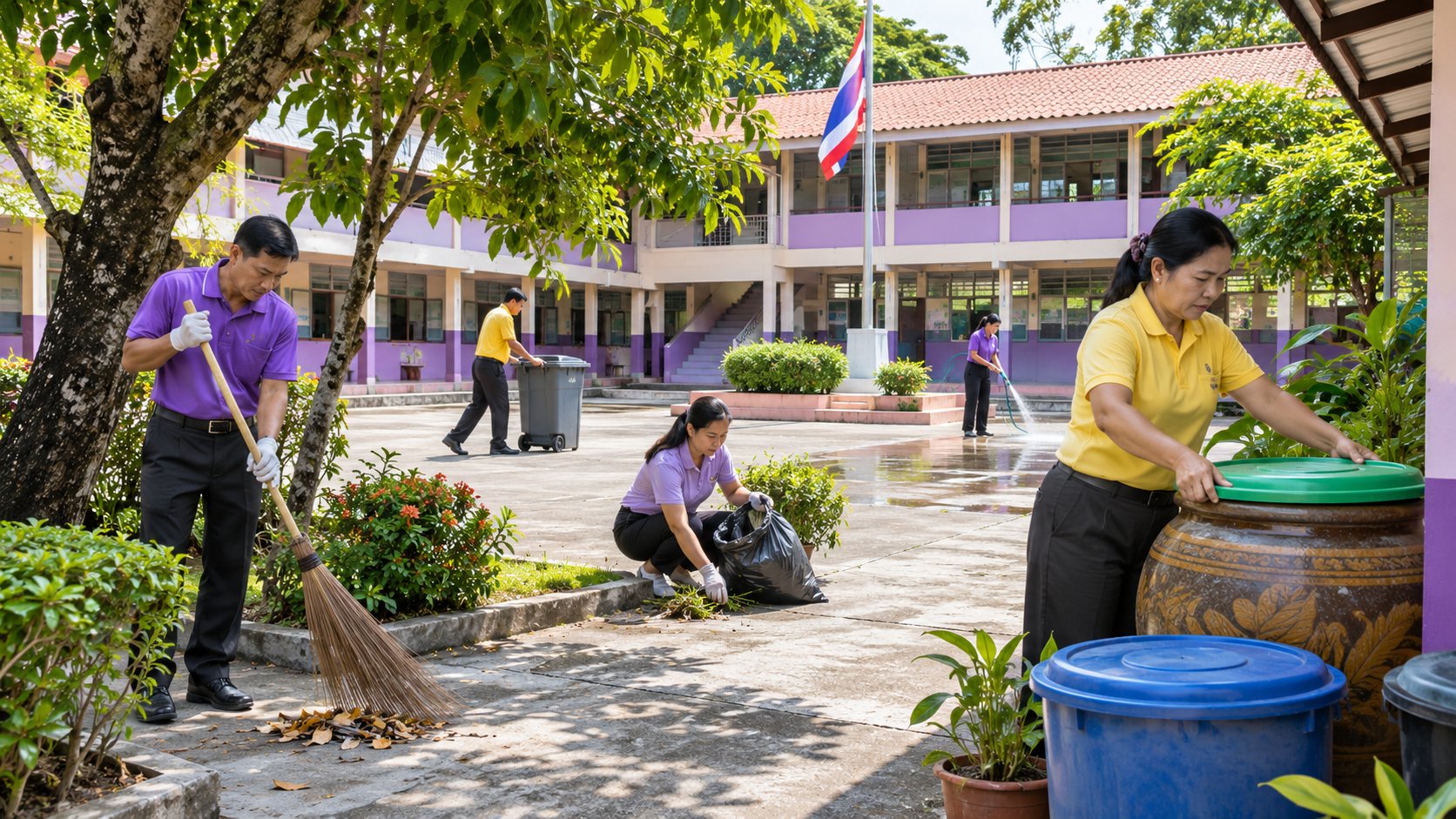
Children spend much of the day at school, and adults often spend long hours at work. If mosquitoes are breeding around those places, prevention cannot stop at the front door of the home.
Thailand’s Ministry of Public Health has described a 2026 dengue strategy involving schools, factories and hospitals. The aim is to reduce illness and deaths through cleaner surroundings, better awareness and improved care. A programme name does not guarantee that every site has the same facilities or has eliminated all risk.
What the ministry announced
In an August 2026 update, the ministry reported that its dengue-free school work had reached 356 schools in 51 provinces, while 69 factories in 29 provinces had joined the workplace effort. It also described Dengue Smart Care as an approach to improve screening, diagnosis and treatment in hospitals, with a pilot and plans for expansion.
Those are figures from the announcement, not a live count or proof that every school, factory or hospital is participating now. Ask the institution directly about its current arrangements.
Questions parents can ask
A practical conversation with a school might cover:
- Who checks for standing water, and how often are checks repeated?
- Are tanks and other water containers securely covered?
- How can parents report a possible breeding place or a child’s confirmed infection?
- What happens if a child develops a fever during the school day?
- How are families informed when local health authorities issue advice?
At a workplace, similar questions can be asked about shared gardens, drainage, water storage and responsibility for maintenance. Encourage management to contact local health authorities when professional help is needed.
Continue the routine at home
Thailand’s recommended three-part approach is to keep the home tidy, cover stored water and remove rubbish that can collect water. Use appropriate repellent and protective clothing as directed, including during the day when Aedes mosquitoes may bite.
If a child or adult develops symptoms that could be dengue, contact a healthcare professional. Severe abdominal pain, persistent vomiting, bleeding or unusual drowsiness call for urgent assessment. This article is general information, not medical advice.

