Editorial review: 21 November 2026. This is general information, not personalised professional advice. Rules and conditions may change; confirm with the relevant authority.
The overlooked part of a journey home
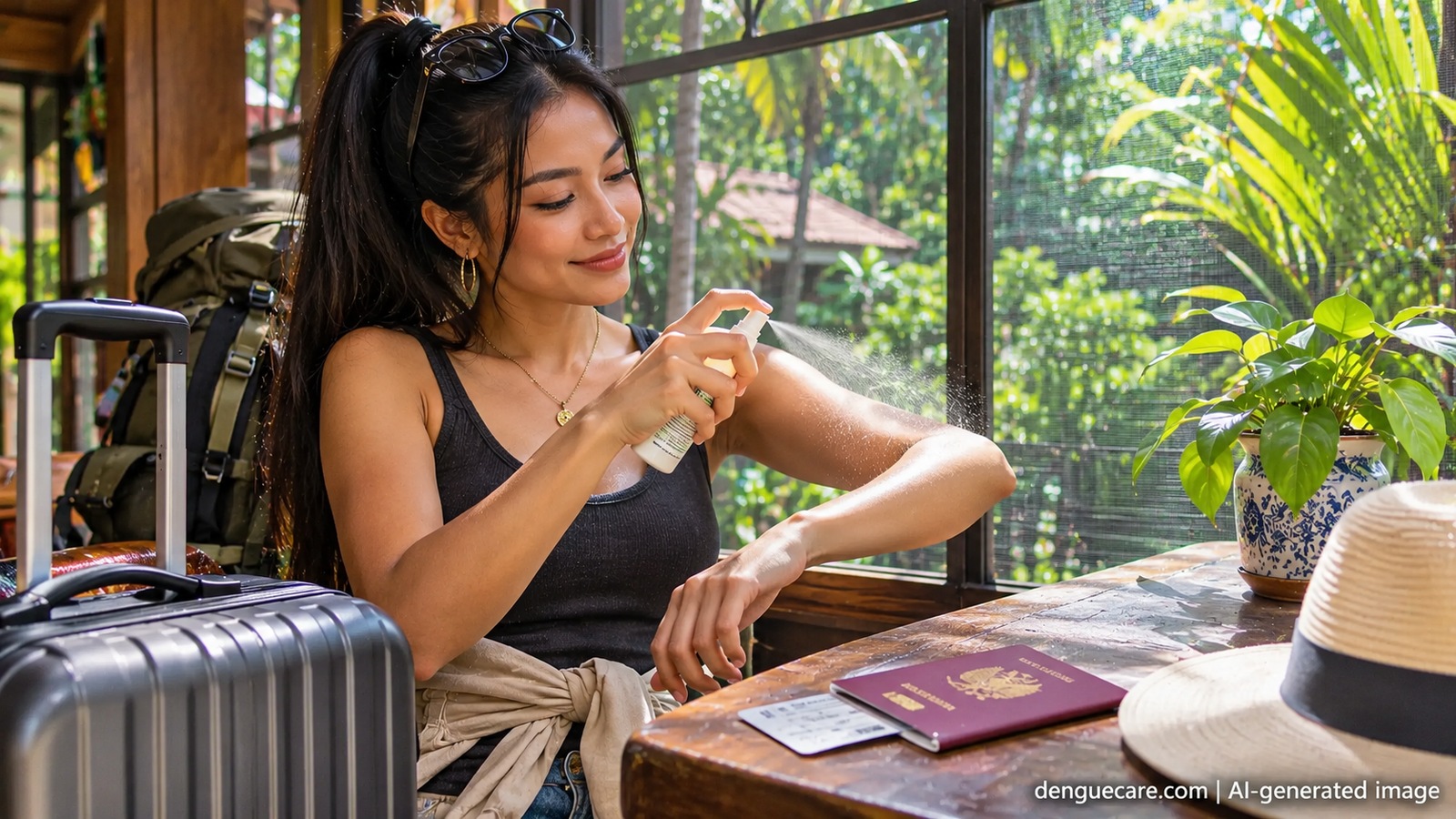
A journey does not end the moment a suitcase reaches the hallway. People returning from places where dengue circulates should also think about preventing mosquito bites after their return, especially if they are ill or believe they may have been exposed. Dengue is transmitted primarily by infected Aedes mosquitoes rather than through ordinary social contact. A mosquito can acquire infection by biting someone with dengue virus in the blood, then potentially pass it onward. The CDC advises travellers returning from areas with dengue risk to prevent mosquito bites for three weeks, even if they feel well. This is a practical community-protection step, not proof that a traveller is infected.
Why daytime protection matters
Aedes mosquitoes frequently bite during daylight hours, so advice limited to covering up after dark misses an important part of prevention. Repellent should be chosen and used in accordance with its label. Long sleeves and trousers can reduce exposed skin, but protection must be practical for weather and individual needs. Window and door screens can also reduce indoor bites. A person who lives in an area with few mosquitoes may not face the same level of exposure as someone in a warmer climate, yet travel routes and weather can change quickly. The most useful plan reflects conditions where the person actually is, not simply where the trip began.
Make a return-home checklist
Before leaving a dengue-risk destination, check whether you have sufficient repellent for transit and the first days back. On returning, close or screen obvious entry points for mosquitoes, empty standing water around the home and make sure you know how to access healthcare if symptoms develop. Do not rely solely on devices marketed as mosquito-proof without independent evidence. Families may need to coordinate who checks water containers and who helps children follow repellent instructions. If a destination or home region has an official vector-control programme, follow that advice rather than experimenting with household pesticide mixtures. Consistency is more useful than a complicated ritual that stops after two days.
Symptoms require judgement, not internet diagnosis
Fever, headache, muscle pain, nausea and rash can occur with dengue but also with many other infections. A web article cannot determine whether an individual has dengue, and a negative assumption based on the absence of a rash is unsafe. Anyone who develops a concerning fever after travel should tell a clinician where and when they travelled. Seek urgent medical assistance for warning signs such as severe abdominal pain, persistent vomiting, bleeding, unusual drowsiness or deterioration. The period when fever subsides can still require vigilance. Avoid starting medicines or supplements on the basis of online speculation; a qualified professional should advise on diagnosis and treatment.
Respect other people without creating stigma
Returning travellers are not hazards to be avoided, and dengue is not spread through ordinary touching, conversation or shared meals. The reason for mosquito precautions is to interrupt a possible vector-borne transmission pathway, not to isolate someone socially. A calm explanation can be helpful when a family member asks why repellent is needed even after landing at home. Explain that the recommendation applies irrespective of symptoms because not every infection produces obvious illness. Do not share another person's medical information or travel details without permission. Effective public-health communication is factual, respectful and proportionate to the evidence available.
Check official updates before the next trip
Dengue risk varies geographically and seasonally. Travellers should consult current country-specific travel-health notices and local public-health information before departure rather than assuming last year's situation remains unchanged. If another trip is planned soon, discuss personalised risk and suitable preventive measures with a qualified travel-health professional. Vaccine policies and eligibility differ by country and population, and they should never be inferred from advertising or social-media anecdotes. Keep one bookmark for an official prevention page and revisit it when plans change. The habit worth retaining is simple: consider bite prevention during travel, during the journey home and in the first weeks afterward.
Frequently asked questions
Is this advice a guarantee?
No. Conditions vary by location, service and individual circumstances. Treat this page as a planning aid and follow current official instructions.
When should I check the source again?
Check before a trip, transaction, event or other material decision. An earlier article cannot guarantee that policies or conditions have not changed.
Can I share the checklist?
Yes, share a link to the article, but do not remove important qualifications or present its editorial illustrations as photographs of actual events.
Sources
Primary official reference (reviewed 21 November 2026).

